LMT156PAQFDA
LCD Module User Manual
Prepared by:
Checked by:
Approved by:
Liyongzheng
Wanggang
Dingxin
Date: 2024-06-22
Date: 2024-06-22
Date: 2024-06-22
Rev. Descriptions
Edit
Release Date
0.1
Preliminary release
Liyongzheng
2024-06-22
Document Name: LMT156PAQFDA-Rev0.1
Page: 1 of 16

TOPWAY
LCD Module User Manual
LMT156PAQFDA
Table of Content
1. General Specification ............................................................................................................ 3
2. Block Diagram ........................................................................................................................ 3
3. Terminal Function .................................................................................................................. 4
3.1 K1 Pin assignment (LCD Interface)......................................................................................................................... 4
4. Absolute maximum rating ..................................................................................................... 5
5. Electrical Characteristics ...................................................................................................... 6
5.1 DC Characteristics for Panel Driving ...................................................................................................................... 6
5.2 DC Characteristics for Driving Backlight ................................................................................................................ 6
5.3 Recommended Power ON/OFF Sequence ............................................................................................................ 7
5.4 LVDS DC electrical characteristics ......................................................................................................................... 8
5.5 LVDS AC electrical characteristics ......................................................................................................................... 9
6. Timing Chart ......................................................................................................................... 10
6.1 Timing Characteristics .......................................................................................................................................... 10
6.2 LVDS data mapping ............................................................................................................................................. 11
7. Optical Characteristics ...................................................................................................... 12
8. LCD Module Design and Handling Precautions ................................................................. 15
Warranty ...................................................................................................................................... 16
Document Name: LMT156PAQFDA-Rev0.1
Page: 2 of 16
TOPWAY
LCD Module User Manual
LMT156PAQFDA
1. General Specification
Signal Interface :
LVDS (2 port), 24bit VESA
Display Technology :
a-Si TFT active matrix
Display Mode :
Transmissive, Normally Black
Screen Size(Diagonal) :
15.6 inch
Outline Dimension :
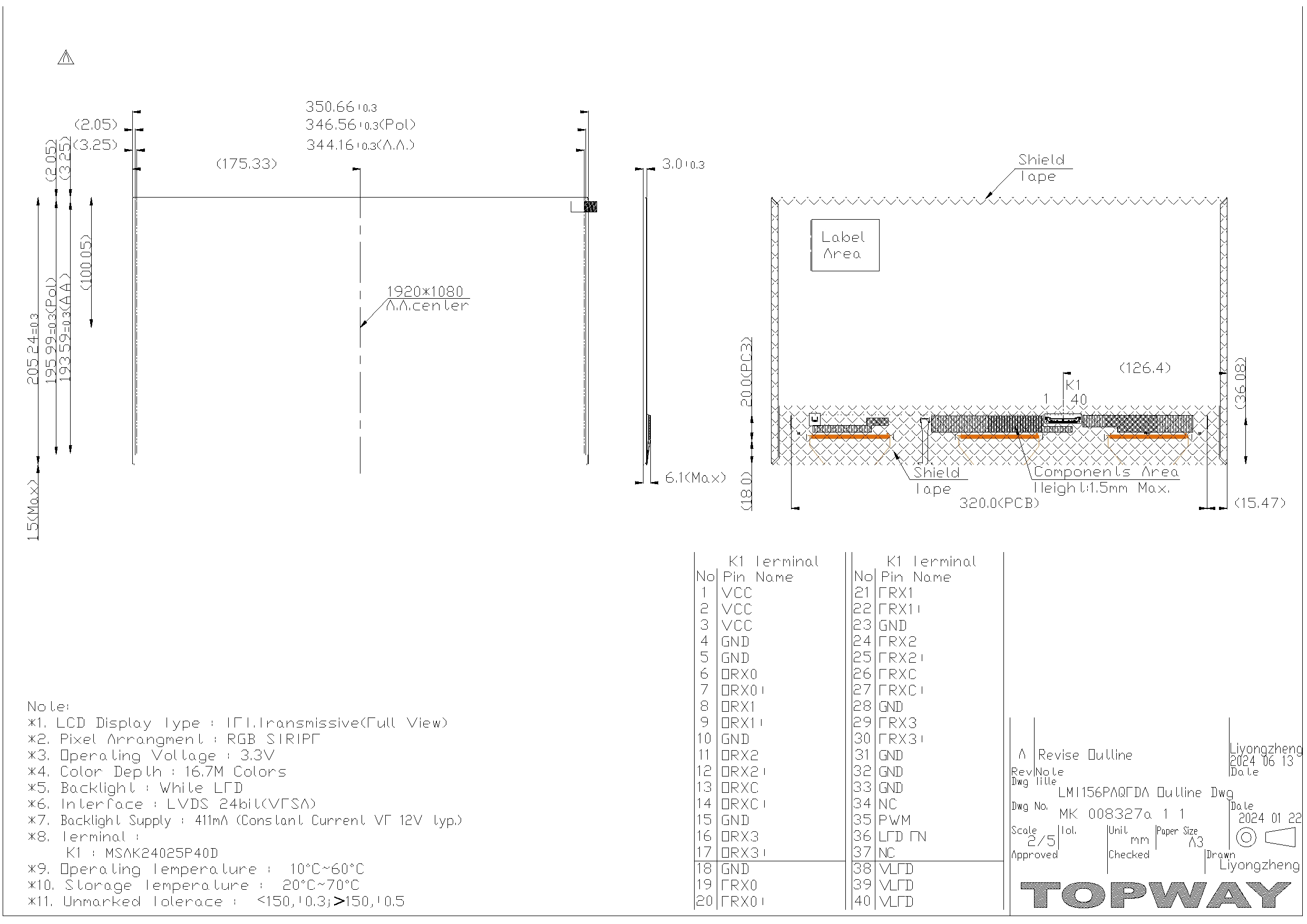
350.66 x 205.24 x 6.1(Max) (mm)
(see attached drawing for details)
Active Area :
344.16x 193.59 (mm)
Number of dots :
1920(RGB) x 1080
Color Depth :
16.7M
Pixel Pitch :
0.17925 x 0.17925(mm)
Pixel Configuration :
R.G.B. Vertical Stripe
Backlight :
White LED
Viewing Direction :
Full
Surface Treatment :
Anti-Glare
Operating Temperature
-10 ~ +60°C
Storage Temperature :
-20 ~ +70°C
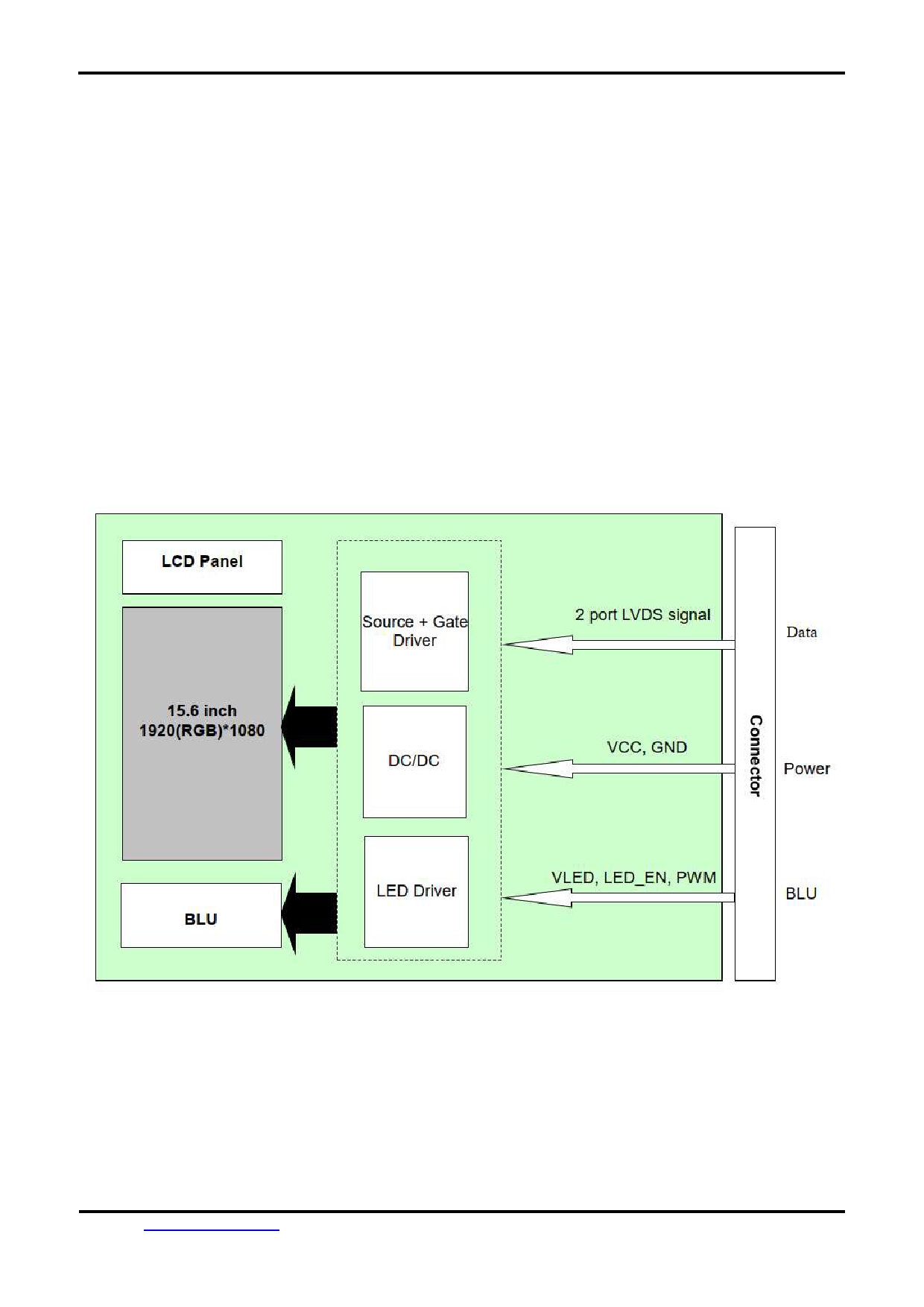
2. Block Diagram
Figure 2.1 LCD Module Block Diagram
Document Name: LMT156PAQFDA-Rev0.1
Page: 3 of 16
TOPWAY
LCD Module User Manual
LMT156PAQFDA
3. Terminal Function
3.1
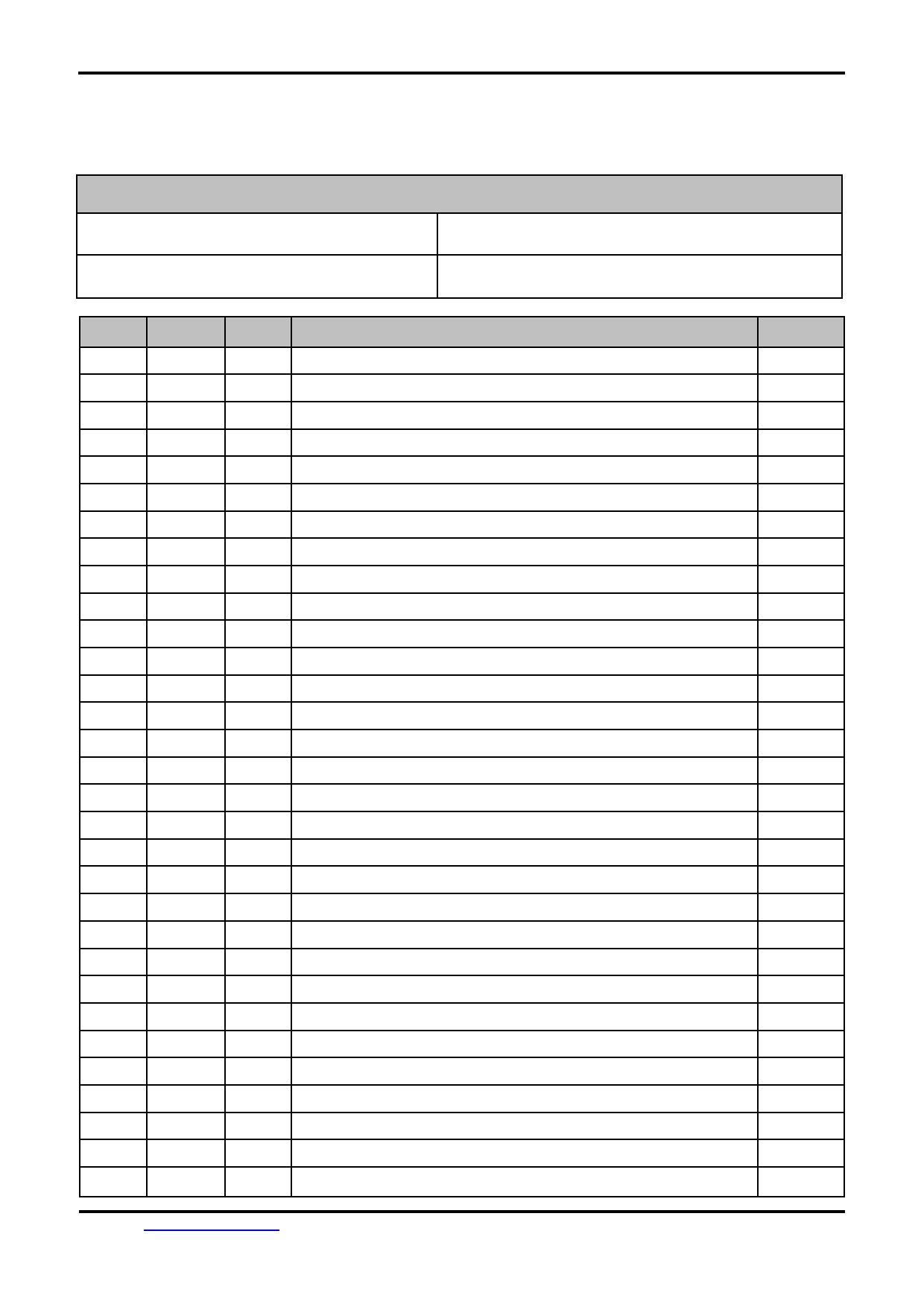
K1 Pin assignment (LCD Interface)
Connector Information
LCD Module connector
MSAK24025P40D
Matching connector
I-PEX-20454-240T or equivalent
Table 3.1.1 Connector information
No
Symbol
I/O
Description
Comment
1
VCC
P
+3.3V input voltage
2
VCC
P
+3.3V input voltage
3
VCC
P
+3.3V input voltage
4
GND
P
Ground
5
GND
P
Ground
6
ORX0-
I
-LVDS differential data input (R0~R5,G0)
7
ORX0+
I
+LVDS differential data input (R0~R5 G0)
8
ORX1-
I
-LVDS differential data input (G1~G5,B0,B1)
9
ORX1+
I
+LVDS differential data input (G1~G5,B0,B1)
10
GND
P
Ground
11
ORX2-
I
-LVDS differential data input (B2~B5,-,-,DE)
12
ORX2+
I
+LVDS differential data input (B2~B5,-,-,DE)
13
ORXC-
I
-LVDS differential Clock input
14
ORXC+
I
+LVDS differential Clock input
15
GND
P
Ground
16
ORX3-
I
-LVDS differential data input (R6~R7,G6~G7,B6~B7)
17
ORX3+
I
+LVDS differential data input (R6~R7,G6~G7,B6~B7)
18
GND
P
Ground
19
ERX0-
I
-LVDS differential data input (R0~R5,G0)
20
ERX0+
I
+LVDS differential data input (R0~R5,G0)
21
ERX1-
I
-LVDS differential data input (G1~G5,B0,B1)
22
ERX1+
II
+LVDS differential data input (G1~G5,B0,B1)
23
GND
P
Ground
24
ERX2-
I
-LVDS differential data input (B2~B5,-,-,-)
25
ERX2+
I
+LVDS differential data input (B2~B5,-,-,-)
26
ERXC-
I
-LVDS differential Clock input
27
ERXC+
I
+LVDS differential Clock input
28
GND
P
Ground
29
ERX3-
I
-LVDS differential data input (R6~R7,G6~G7,B6~B7)
30
ERX3+
I
+LVDS differential data input (R6~R7,G6~G7,B6~B7)
31
GND
P
Ground
Document Name: LMT156PAQFDA-Rev0.1
Page: 4 of 16
TOPWAY
LCD Module User Manual
LMT156PAQFDA
32
GND
P
Ground
33
GND
P
Ground
34
NC
N
No connection
35
PWM
I
Dimming control signal
36
LED_EN
I
Backlight on/off control signal(1:on, 0:off)
37
NC
N
No connection
38
VLED
P
Backlight power supply :+12V
39
VLED
P
Backlight power supply :+12V
40
VLED
P
Backlight power supply :+12V
Table 3.1.2 Pin Assignment for LCD Interface
Note1: I/O definition: I---Input, O---Output, P---Power/Ground, N---No connection
Note2: All of the GND pins should be connected to the system ground.
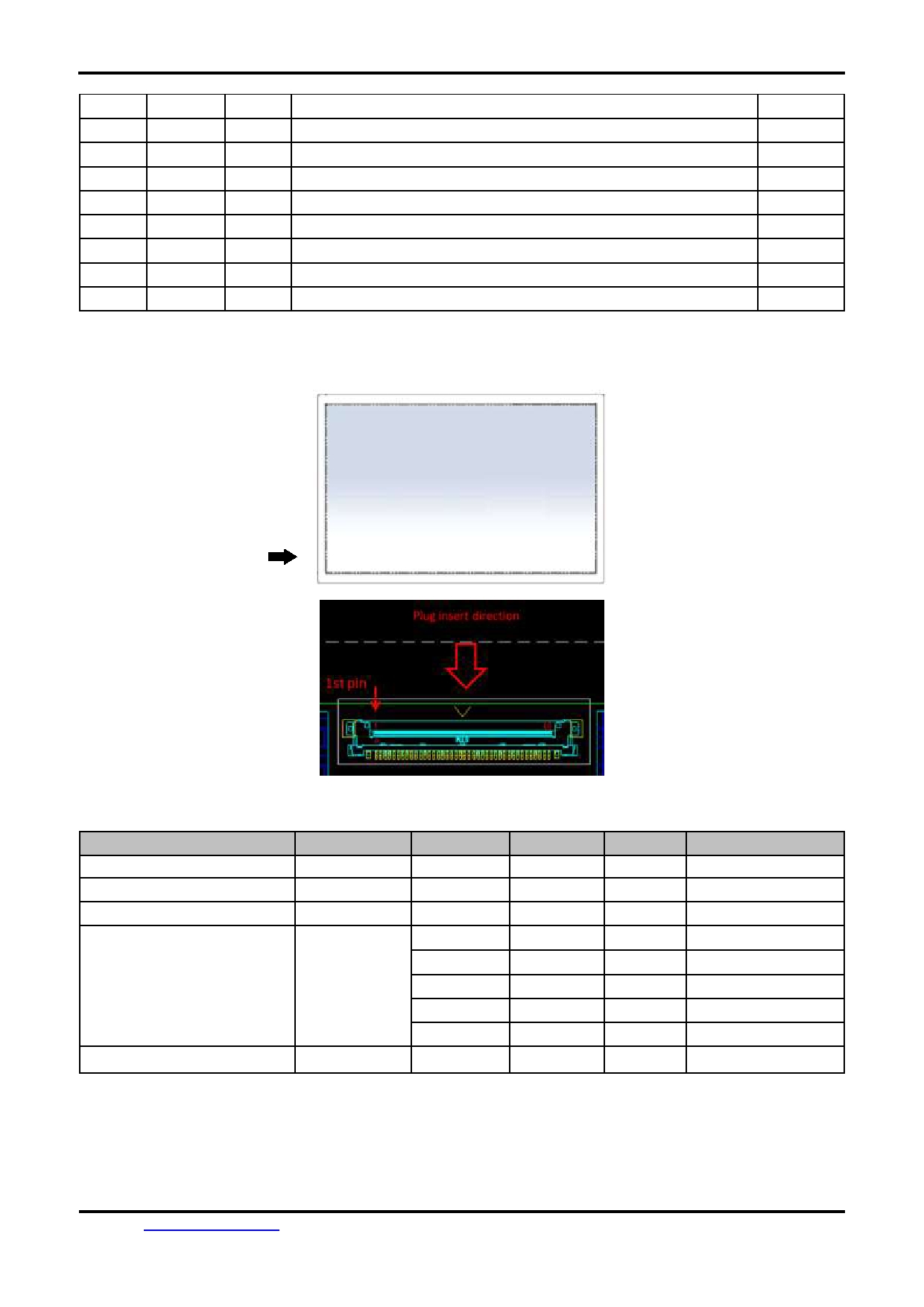
Note3: Display direction
PCB side
Note4: 1st pin location
4. Absolute maximum rating
Item
Symbol
MIN
MAX
Unit
Remark
Power Voltage
VCC
-0.3
5.0
V
Note 1
Operating Temperature
Top
-10
60
℃
Storage Temperature
Tst
-20
70
℃
--
≤95
%
Ta≤40 ℃
--
≤85
%
40 ℃< Ta≤50 ℃
Relative Humidity
50 ℃< Ta≤60 ℃
Note 2
RH
--
≤55
%
--
≤36
%
60 ℃< Ta≤70 ℃
--
≤24
%
70 ℃< Ta≤80 ℃
Absolute Humidity
AH
--
≤70
g/m³
Ta > 70 ℃
Table 4.1 Absolute Maximum Ratings
Note1: Input voltage include all in put data.
Note2: Ta means the ambient temperature. It is necessary to limit the relative
humidity to the specified temperature range. Condensation on the module is
not allowed.
Document Name: LMT156PAQFDA-Rev0.1
Page: 5 of 16
TOPWAY
LCD Module User Manual
LMT156PAQFDA
Note3: The absolute maximum rating values of this product are not allowed to be
exceeded at any times. A module should be used with any of the absolute
maximum ratings exceeded, the characteristics of the module may not be
recovered, or in an extreme condition, the module may be permanently
damaged.
5. Electrical Characteristics
5.1 DC Characteristics for Panel Driving
Item
Symbol
MIN
TYP
MAX
Unit
Remark
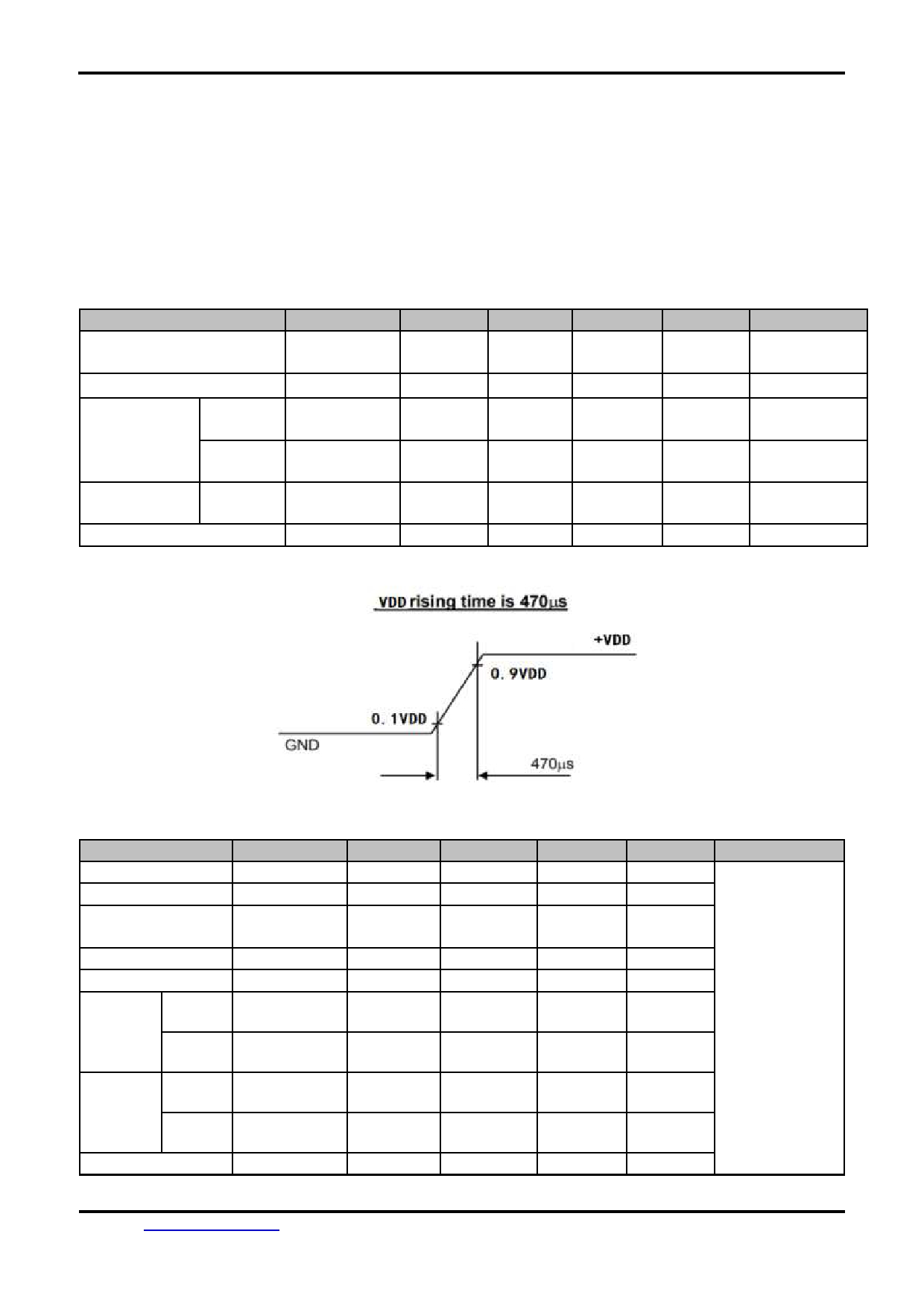
Supply Voltage
VCC
3.2
3.3
3.4
V
Without
ripple
VCC current
I VCC
--
246
369
mA
Low
VIL
DGND
--
0.2×VCC
V
Input Signal
Level
Voltage
High
Level
VIH
0.8×VCC
--
VCC
V
Power
60Hz
P
--
811.8
1217.7
mW
White
Consumption
pattern
Inrush current
Irush
--
--
1.5
A
Note 1
Table 5.1.1 Operating Voltages
Note1: To test the current dissipation, using the “white pattern” shown
5.2 DC Characteristics for Driving Backlight
Item
Symbol
MIN
TYP
MAX
Unit
Remark
VLED
VLED
10.8
12
13.2
V
VLED Current
IVLED
--
411
616.5
mA
Backlight Power
Consumption
P
--
4932
7398
mW
PWM frequency
F
200
--
20K
Hz
PWM duty
D
3
--
100
%
High
PWM
level
--
1.6
-
-
V
signal
Low
level
--
-
-
0.7
V
High
1.6
-
-
V
LED_EN
level
--
signal
Low
level
--
-
-
0.7
V
LED life time
--
30000
--
-
Hrs
Table 5.2.1 LED Backlight Characteristics
Document Name: LMT156PAQFDA-Rev0.1
Page: 6 of 16
TOPWAY
LCD Module User Manual
LMT156PAQFDA
Note1: According to LED driver IC characteristics, the minimum value of VELD_PWM duty may
vary with VLED_PWM frequency, higher the frequency, bigger the duty
Note2: Optical performance should be evaluated at Ta=25 ℃ only.
Note3: If LED is driven by high current, high ambient temperature & humidity condition. The life
time of LED will be reduced.
Note4: Operating life means brightness goes down to 50% of initial brightness. Typical
operating life time is estimated data.
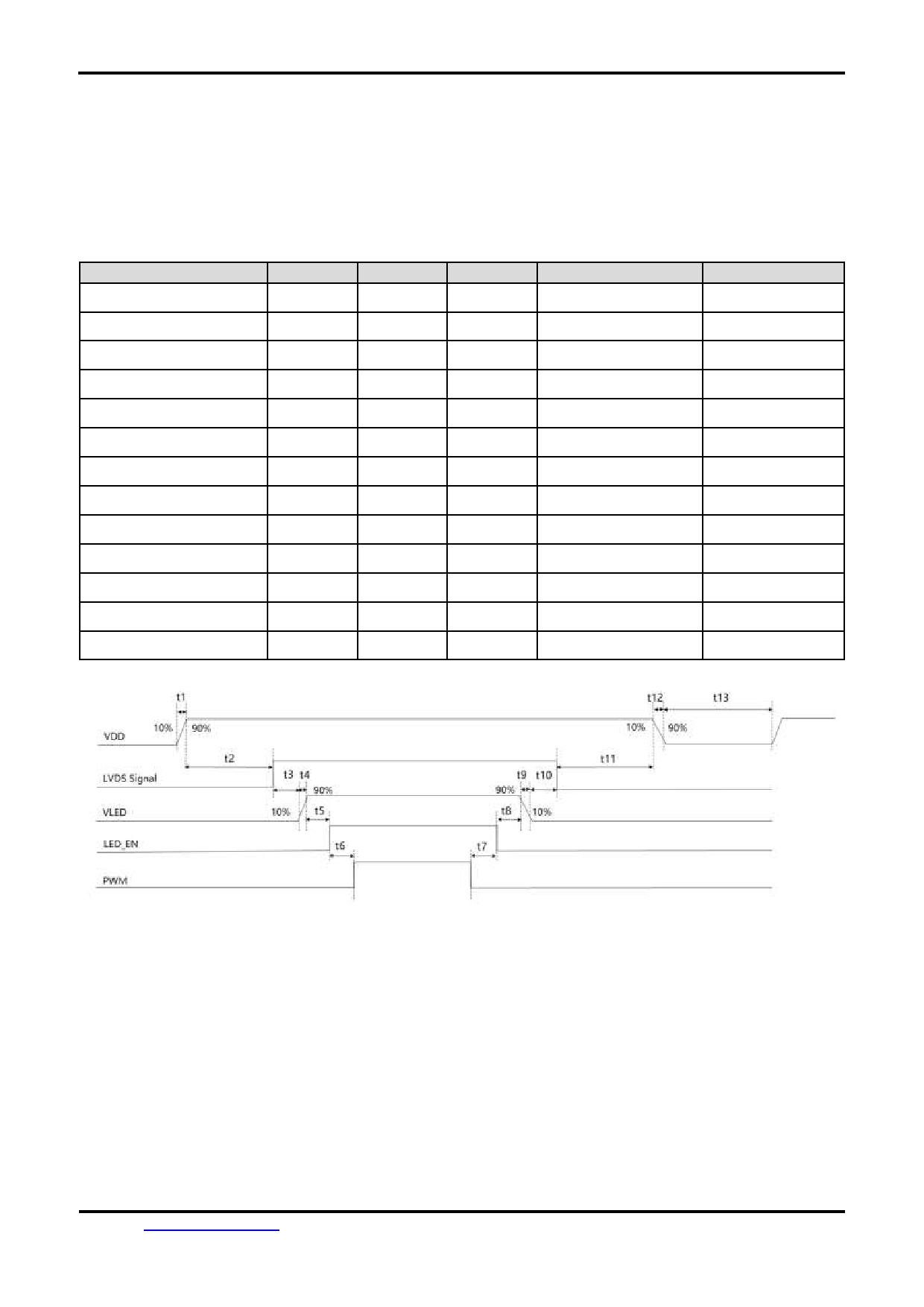
5.3 Recommended Power ON/OFF Sequence
Symbol
Min
Typ
Max
Unit
Remark
t1
1
-
3
ms
t2
-
-
1
ms
t3
200
-
-
ms
t4
1
-
-
ms
Note 1
t5
2
-
-
ms
t6
2
-
-
ms
t7
2
-
-
ms
t8
2
-
-
ms
t9
1
-
-
ms
t10
200
-
-
ms
t11
200
-
-
ms
t12
1
-
3
ms
t13
1000
-
-
ms
Table 5.3.1 Power on sequence
Figure 5.3.1 Power on sequence
Note1: Display at least two black frames before signal off. It is advised that backlight turned on
later than display
Note2: The low level of these signals and analog powers are GND level.
Note3: All of the power and signals should be kept at GND level before power on. If there are
residual voltages on them, the LCD might not work properly.
Note4: The power on/off sequence is the first version. It will be updated when the design is
fixed.
Note5: Keep LED_EN at low level until the display has stabilized.
Document Name: LMT156PAQFDA-Rev0.1
Page: 7 of 16
TOPWAY
LCD Module User Manual
LMT156PAQFDA
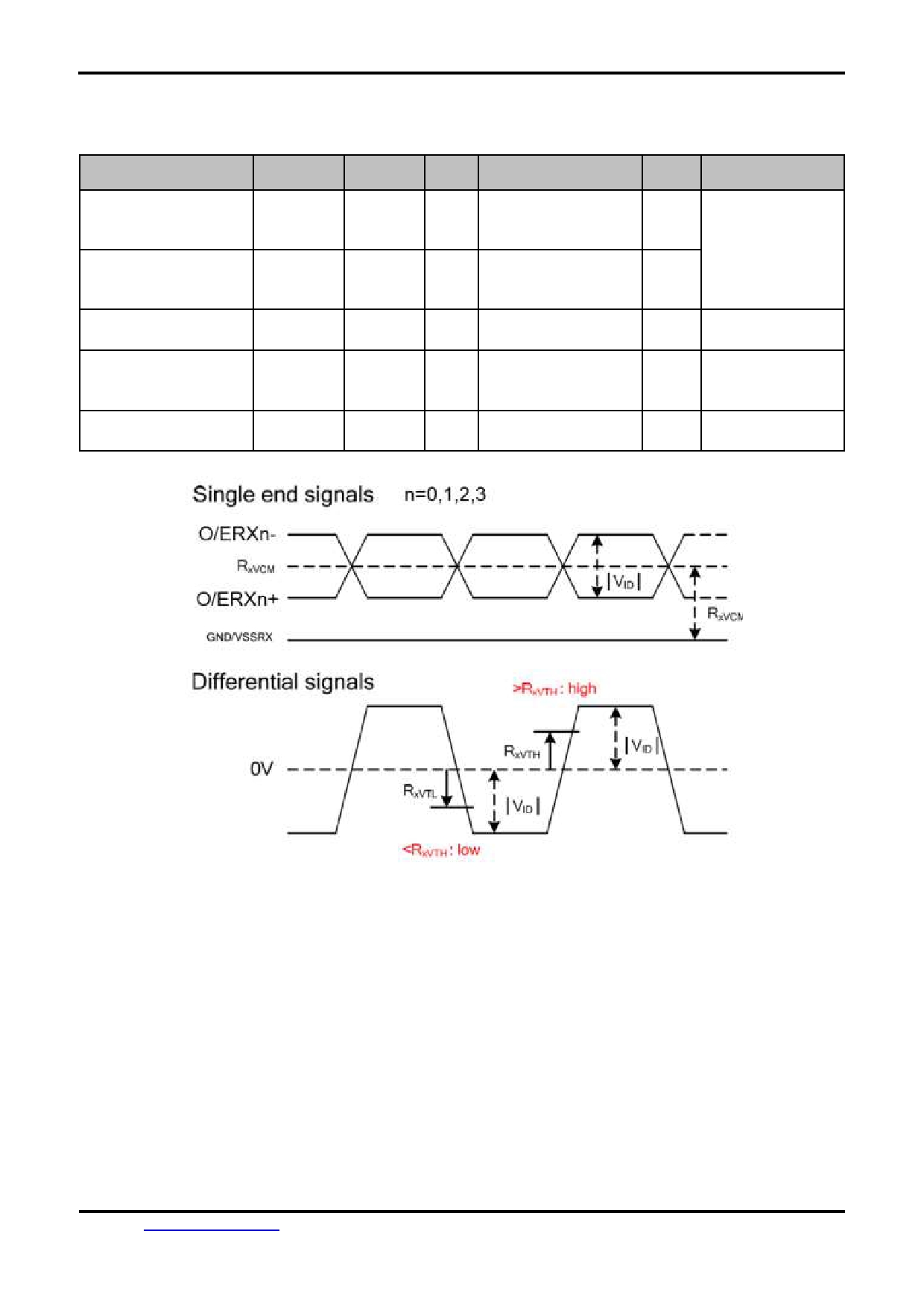
5.4 LVDS DC electrical characteristics
Parameter
Symbol
Min
Typ
Max
Unit
Condition
Differential Input
high Threshold
R xVTH
-
-
0.1
V
voltage
Differential Input
R xVCM =1.2V
Low Threshold
R xVTL
-0.1
-
-
V
voltage
Input voltage range
(signaled-end)
R xVIN
0
-
VCC-1.0
V
Differential Input
common Mode
R xVCM
0.6
1.2
2.4-|VID|/2
V
voltage
Differential Input
voltage
|V ID |
0.1
0.4
0.6
V
Table 5.4.1 LVDS DC Characteristics
Figure 5.4.1 LVDS DC Characteristics
Document Name: LMT156PAQFDA-Rev0.1
Page: 8 of 16
TOPWAY
LCD Module User Manual
LMT156PAQFDA
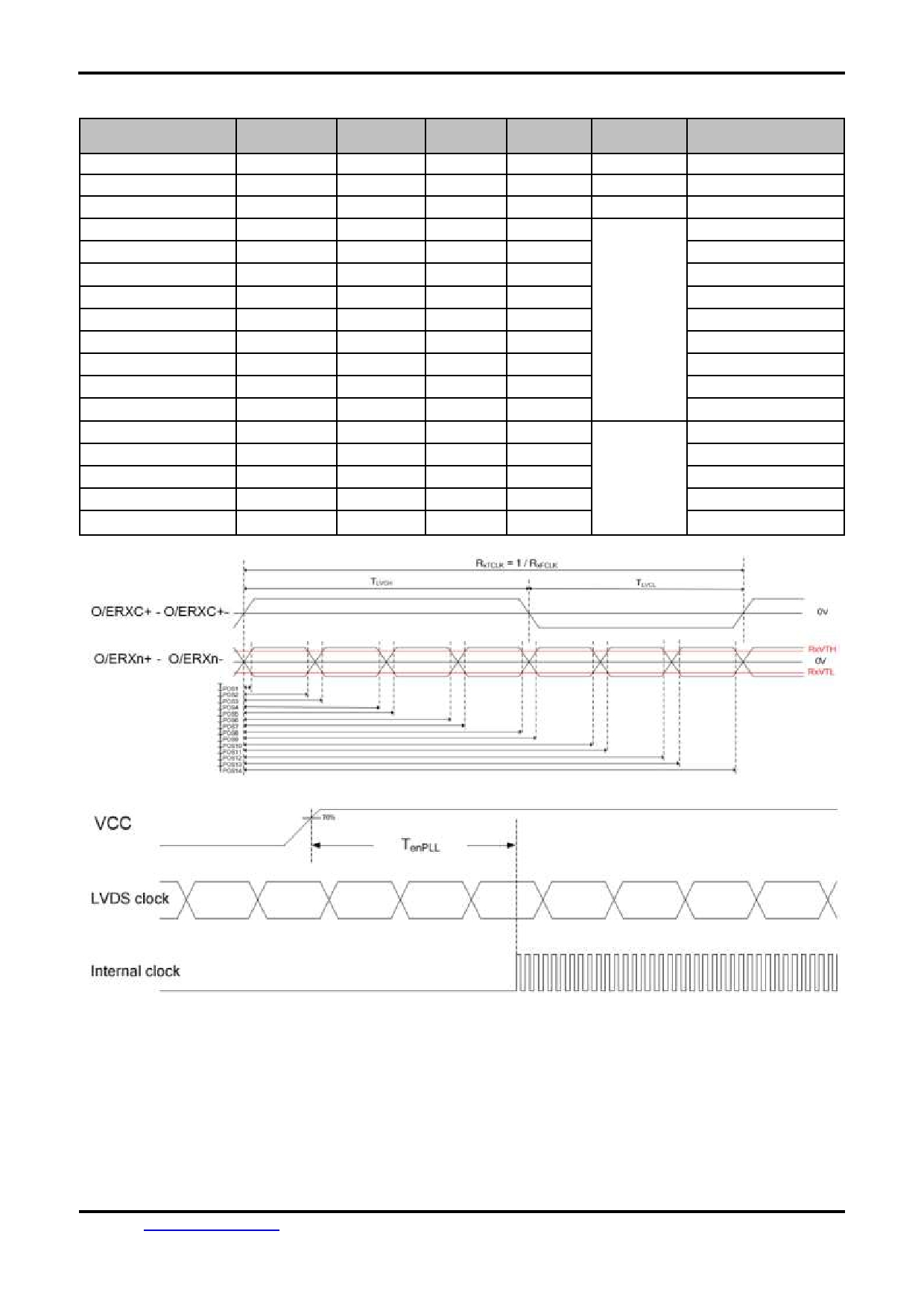
5.5 LVDS AC electrical characteristics
Parameter
Symbol
Min
Typ
Max
Unit
Condition
1data bit time
UI
-
1/7
-
RxTCLK
Clock high time
T LVCH
-
4
-
UI
Clock low time
T LVCL
-
3
-
UI
Position1
Tpos1
-0.2
0
0.2
Position2
Tpos2
0.8
-
1.2
Position3
Tpos3
0.8
1
1.2
Position4
Tpos4
1.8
-
2.2
Position5
Tpos5
1.8
2
2.2
UI
Position6
Tpos6
2.8
-
3.2
Position7
Tpos7
2.8
3
3.2
Position8
Tpos8
3.8
-
4.2
Position9
Tpos9
3.8
4
4.2
Position10
Tpos10
4.8
-
5.2
Position11
Tpos11
4.8
5
5.2
Position12
Tpos12
5.8
-
6.2
UI
Position13
Tpos13
5.8
6
6.2
Position14
Tpos14
6.8
-
7.2
Table 5.5.1 LVDS AC Characteristics
Figure 5.5.1 LVDS DC Characteristics
Figure 5.5.2 LVDS DC Characteristics
Document Name: LMT156PAQFDA-Rev0.1
Page: 9 of 16
TOPWAY
LCD Module User Manual
LMT156PAQFDA
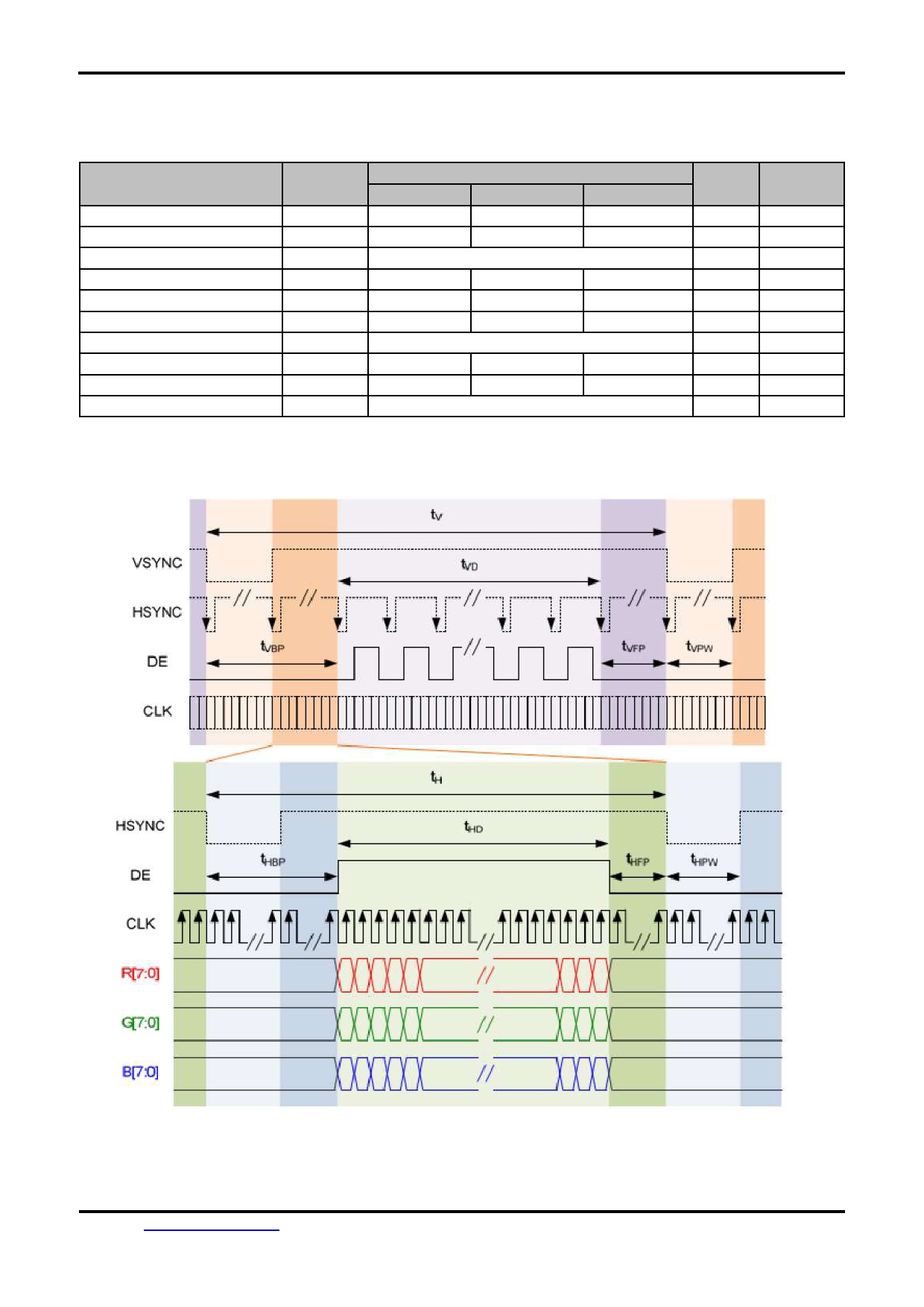
6. Timing Chart
6.1 Timing Characteristics
Value
Parameter
Symbol
Unit
Note
min
typ
max
CLK frequency
t clk
66.5
67.87
75
MHz
Note 1
Horizontal blanking time
t HBT
48
50
99
t clk
t HBP + t HFP
Horizontal display area
t HD
960
t clk
Horizontal period
t H
1008
1010
1059
t clk
Horizontal pulse width
t HPW
2
2
2
t clk
Vertical blanking time
t VBT
20
40
100
t H
t VBP + t VFP
Vertical display area
t VD
1080
t H
Vertical period
t V
1100
1120
1180
t H
Vertical pulse width
t VPW
--
2
--
t H
Frame rate
Fr
60
Hz
Table 6.1.1 Input Timing Parameters
Note1: 1port LVDS timing setting. It is necessary to keep tH and tV within recommend value.
Figure 6.1.1 Clock and Data Input Timing Diagram
Document Name: LMT156PAQFDA-Rev0.1
Page: 10 of 16
TOPWAY
LCD Module User Manual
LMT156PAQFDA
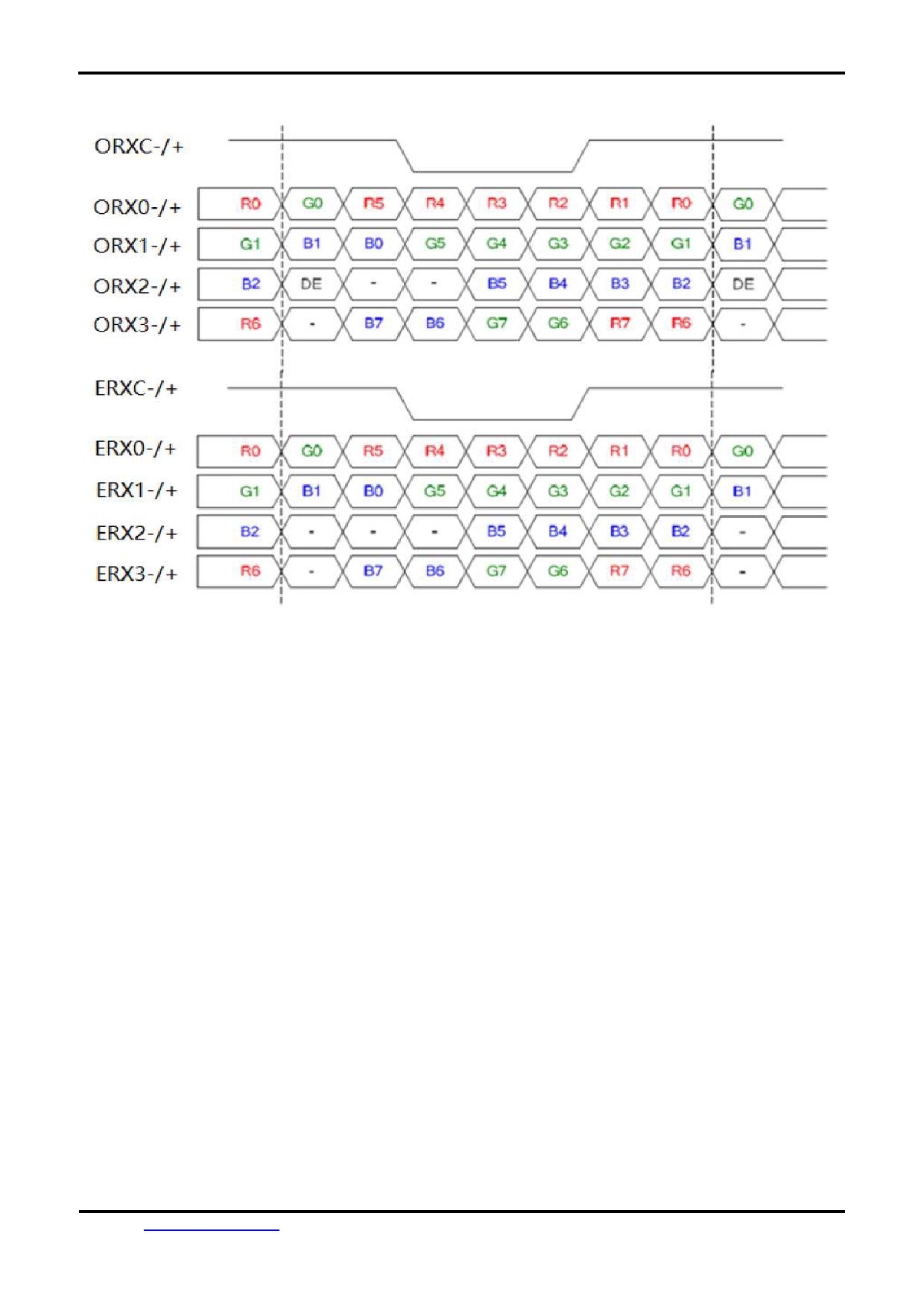
6.2 LVDS data mapping
Table 6.2.1 LVDS data mapping (VESA standard)
Document Name: LMT156PAQFDA-Rev0.1
Page: 11 of 16
TOPWAY
LCD Module User Manual
LMT156PAQFDA
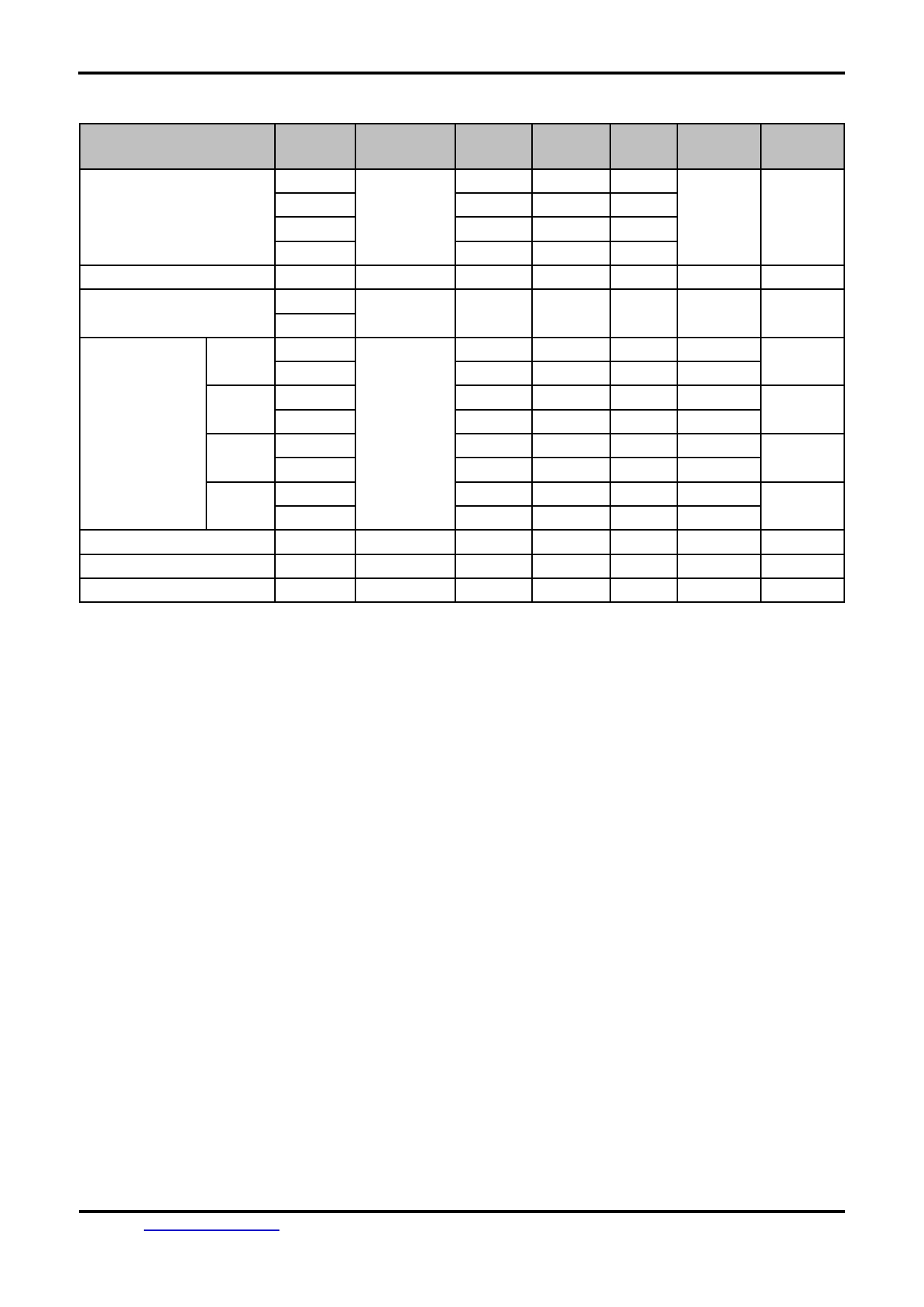
7. Optical Characteristics
Item
Symbol Condition
Min
Typ
Max
Unit
Remark
θT
78
88
--
θB
78
88
--
View Angles
CR ≧ 10
degree
Note 2,3
θL
78
88
--
θR
78
88
--
Contrast Ratio
CR
θ=0 o
1500
2000
--
Note 3
T ON
Response Time
25 ℃
--
35
40
ms
Note 4
T OFF
x
0.254
0.304
0.354
White
Note 1,5
y
0.273
0.323
0.373
x
0.591
0.641
0.691
Red
Note 1,5
y
0.293
0.343
0.393
Chromaticity
Backlight
x
is on
0.284
0.334
0.384
Green
Note 1,5
y
0.577
0.627
0.677
x
0.105
0.155
0.205
Blue
Note 1,5
y
0.001
0.051
0.101
Uniformity
U
-
70
75
--
%
Note 6
NTSC
-
-
67
72
--
%
Note 5
Luminance
L
-
300
350
--
cd/m 2
Note 7
Table 7.1 Optical Parameters
Test Conditions:
1. The ambient temperature is 25 ℃ .
2. The test systems refer to Note 1 and Note 2.
Document Name: LMT156PAQFDA-Rev0.1
Page: 12 of 16
TOPWAY
LCD Module User Manual
LMT156PAQFDA
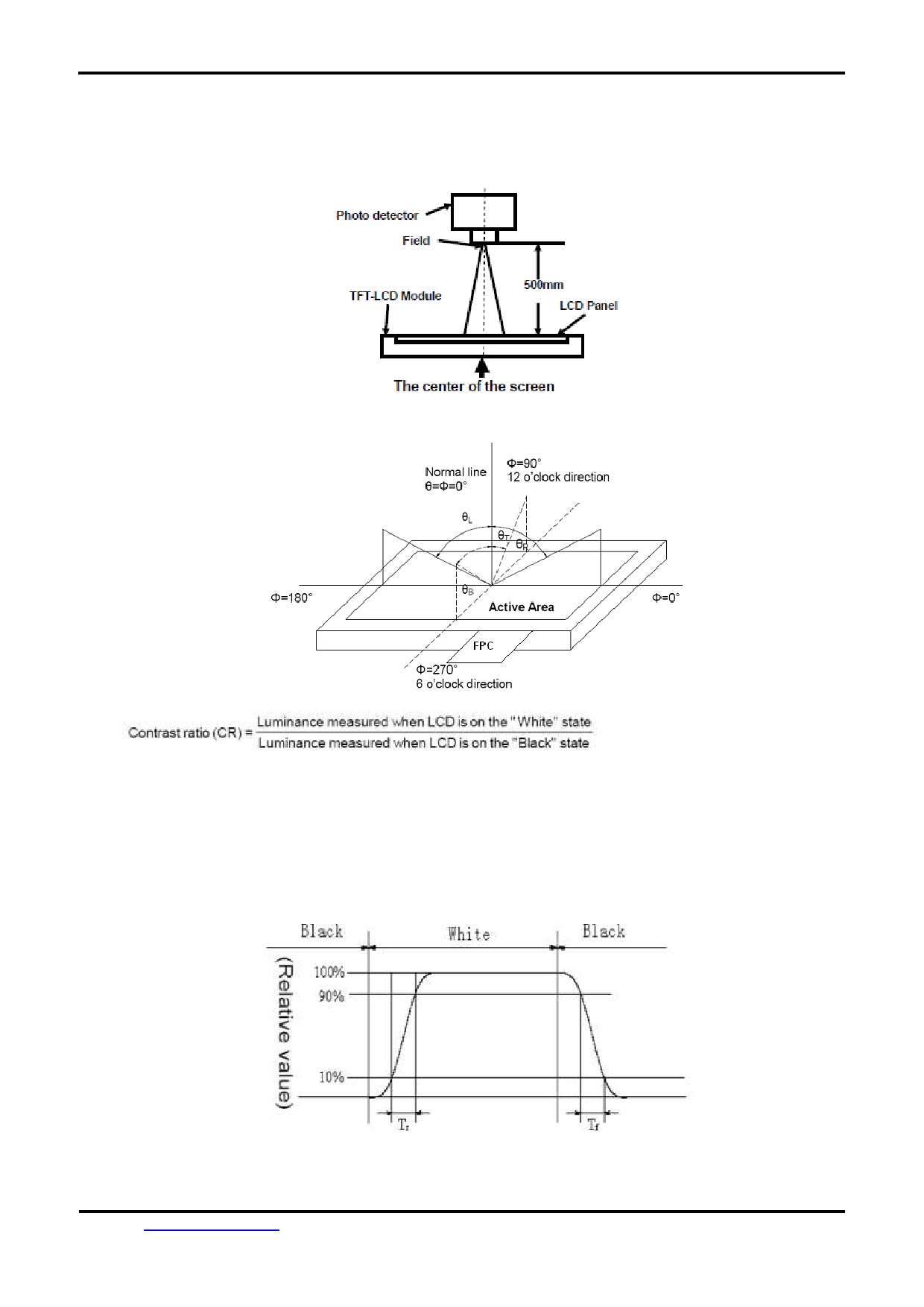
Note 1: Definition of optical measurement system.
The optical characteristics should be measured in dark room. After 5 Minutes operation, the
optical characteristics are measured at the center point of the LCD screen.
Note 2: Definition of viewing angle range and measurement system. Viewing angle is
measured at the center point of the LCD 。
Note 3: Definition of contrast ratio
Note 4: Definition of Response time
For SFT LCM, the response time is defined as the LCD optical switching time interval
between “White” state and “Black” state. Rise time (Tr) is the time between photo detector
output intensity changed from 10% to 90%. And fall time (Tf) is the time between photo
detector output intensity changed from 90% to 10%.
.
Fig3. Response Time Testing(SFT)
Document Name: LMT156PAQFDA-Rev0.1
Page: 13 of 16
TOPWAY
LCD Module User Manual
LMT156PAQFDA
Note 5: Definition of color chromaticity (CIE1931)
Color coordinates measured at center point of LCD.
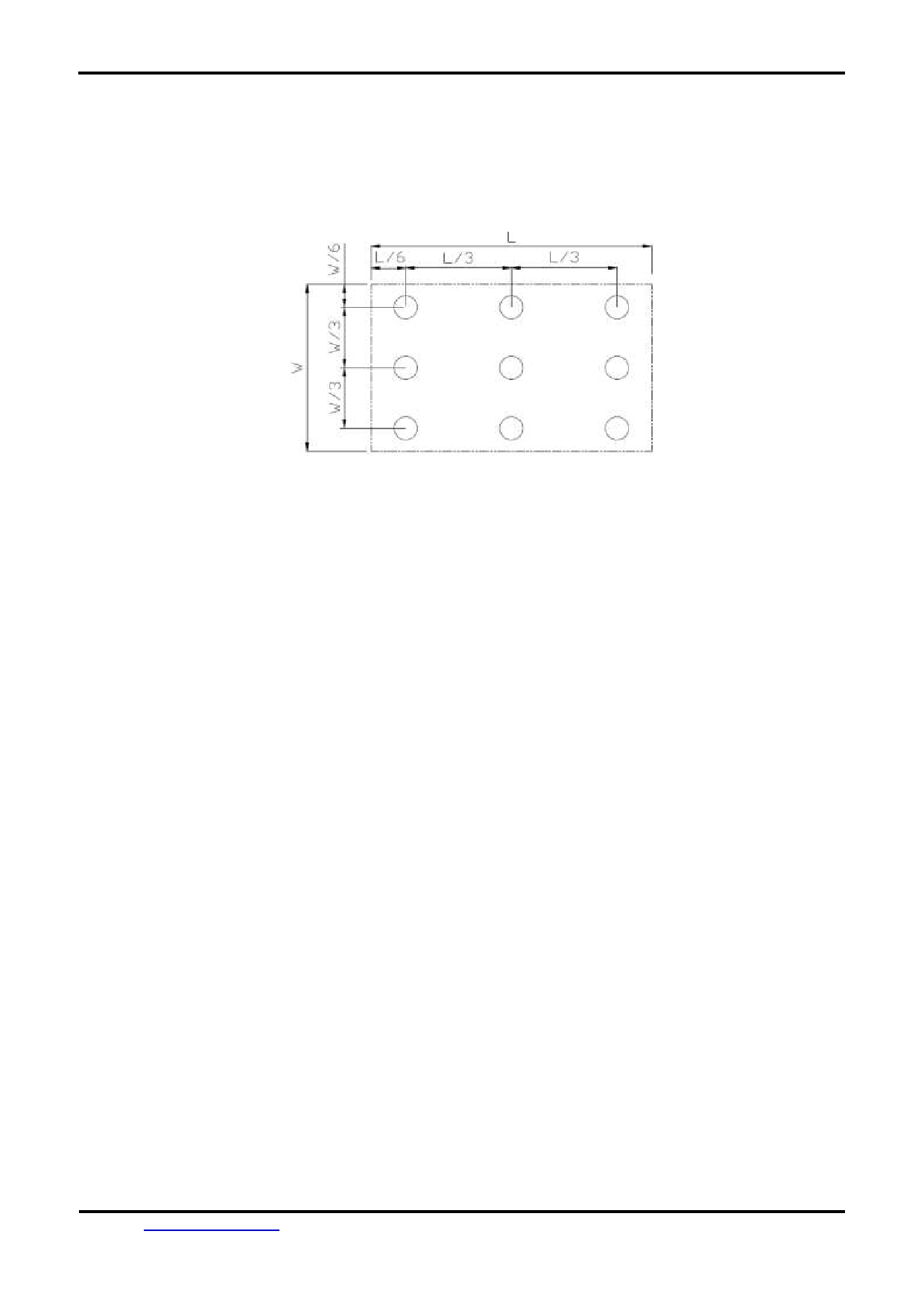
Note 6: Definition of Luminance Uniformity
Active area is divided into 9 measuring areas (Refer Fig. 2). Every measuring point is placed
at the center of each measuring area.
Luminance Uniformity (U) = Lmin/ Lmax
L-------Active area length W----- Active area width
Fig4. Luminance Uniformity Measurement Locations(9 points)
Lmax: The measured Maximum luminance of all measurement position.
Lmin: The measured Minimum luminance of all measurement position.
Note 7: Definition of Luminance:
Measure the luminance of white state at center point.
Document Name: LMT156PAQFDA-Rev0.1
Page: 14 of 16
TOPWAY
LCD Module User Manual
LMT156PAQFDA
8. LCD Module Design and
8. 液晶显示模块设计和使用须知
Handling Precautions
-
Please ensure V0, VCOM is adjustable, to enable LCD module get
-
请注意 V0, VCOM 的设定 , 以确保液晶显示模块在不同
the best contrast ratio under different temperatures, view angles
的使用温度下以及在不同的视角和位置观察模块显
and positions.
示,均能达到最佳对比度,请务必将应用电路上设置
为对比度可调。
-
Normally display quality should be judged under the best contrast
-
请注意液晶显示模块的显示品质判定是指在正常对比
ratio within viewable area. Unexpected display pattern may com
度下以及视窗 (V.A) 范围内进行的,非正常对比度下液
out under abnormal contrast ratio.
晶可能会出现非预期的显示不良,应注意区分。
-
Never operate the LCD module exceed the absolute maximum
-
请勿在最大额定值以外使用液晶显示模块。
ratings.
-
Never apply signal to the LCD module without power supply.
-
请勿在没有接通电源的条件下,给液晶显示模块输送
( No Hot-plugging )
信号。(禁止热插拔)
-
WARNING! Be aware of (if any) frame grounding of the LCD
-
警告!使用前需评估液晶显示模块的金属框架 / 壳体地
Module connection with the system which may cause safety
( 如有 ) 与整机关系和安全性 ( 如:漏电安全性,等 ) 。
issue(e.g. electric shock,etc).
-
Keep signal line as short as possible to reduce external noise
-
请尽可能缩短信号线的连接,以避免对液晶显示模块
interference.
的信号干扰。
-
IC chip (e.g. TAB or COG) is sensitive to light. Strong light might
-
集成电路因 IC 芯片 ( 如 TAB 或 COG) 对紫外线极为敏
cause
malfunction.
Light
sealing
structure
casing
is
感,强光环境下可能会引起液晶显示模块功能失效,
recommended.
故应采用不透光的外壳。
-
Make sure there is enough space (with cushion) between case and
-
请在液晶显示模块与外壳之间保留足够的空间 ( 可使用
LCD panel, to prevent external force passed on to the panel;
衬垫 ) ,以缓冲外力对液晶显示模块的损坏或因受力不
otherwise that may cause damage to the LCD and degrade its
均而产生的显示不匀等异常现象。
display result.
-
Avoid showing a display pattern on screen for a long time
-
避免液晶显示屏在某一画面下长时间点亮,否则有出
(continuous ON segment).
现残影的风险;请通过软件每隔一段时间改变一次画
-
LCD module reliability may be reduced by temperature shock.
面。
-
When storing and operating LCD module, avoids exposure to direct
-
液晶显示模块的可靠性可能因温度冲击而降低。
sunlight, high humidity, high or low temperature. They may
-
请勿在阳光直射、高湿、高温或低温下储存和使用液
damage or degrade the LCD module.
晶显示模块,这将造成液晶显示模块的损坏或失效。
-
Never leave LCD module in extreme condition (max./min
-
请勿在极限环境 ( 最大 / 最小存储 / 工作温度 ) 下使用或
storage/operate temperature) for more than 48hr.
放置液晶显示模块超过 48 小时以上。
-
Recommend LCD module storage conditions is 0 ℃ ~40 ℃ -
液晶显示模块建议存储条件为 : 0 ℃ ~40 ℃ <80%RH 。
<80%RH.
-
LCD module should be stored in the room without acid, alkali and
-
请勿让液晶显示模块存储于带有 酸性 , 碱性 , 有害气
harmful gas.
体环境之中。
-
Avoid dropping & violent shocking during transportation, and no
-
在运输过程中 , 请勿让液晶显示模块跌落与猛烈震动 ,
excessive pressure press, moisture and sunlight.
同时避免 异常挤压 , 高湿度 , 与 阳光照射
-
LCD module can be easily damaged by static electricity. Please
-
液晶显示模块极易受静电损坏,请务必保证液晶显示
maintain an optimum anti-static working environment to protect the
模块在防静电的工作环境中使用或保存。 ( 如 : 烙铁正
LCD module. (eg. ground the soldering irons properly)
确接地 , 等 )
-
Be sure to ground the body when handling LCD module.
-
拿取液晶显示模块时需注意操作人员的接地情况。
-
Only hold LCD module by its sides. Never hold LCD module by
-
请手持液晶显示模块的边沿取放模块,防止热压纸或
applying force on the heat seal or TAB.
TAB 部位受力。
-
When soldering, control the temperature and duration avoid
-
焊接液晶模块时,请注意控制烙铁的温度、焊接时
damaging the backlight guide or diffuser which might degrade the
间,
display result such as uneven display.
以免烫坏导光板或偏光片,导致显示不匀等不良现象
-
Never let LCD module contact with corrosive liquids, which might
发生。
cause damage to the backlight guide or the electric circuit of LCD
-
请勿使用洗板水等腐蚀性液体接触液晶模块,以免腐
module.
蚀导光板或模块电路。
-
Only clean LCD with a soft dry cloth, Isopropyl Alcohol or Ethyl
-
仅可使用柔软的干布 , 异丙醇或乙醇清洁液晶屏表
Alcohol. Other solvents (e.g. water) may damage the LCD.
面,其他任何溶剂 ( 如 : 水 ) 都有可能损坏液晶模块。
-
Never add force to components of LCD module. It may cause
-
请勿挤压液晶显示模块上的元器件,以避免产生潜在
invisible damage or degrade the module's reliability.
的损坏或失效而影响产品可靠性。
-
When mounting LCD module, please make sure it is free from
-
装配液晶显示模块时,请务必注意避免液晶显示模块
twisting, warping and bending.
的扭曲或变形。
Document Name: LMT156PAQFDA-Rev0.1
Page: 15 of 16

TOPWAY
LCD Module User Manual
LMT156PAQFDA
-
Do not add excessive force on surface of LCD, which may cause
-
请勿挤压液晶显示屏表面,这将导致显示颜色的异
the display color change abnormally.
常。
-
LCD panel is made with glass. Any mechanical shock (e.g.
-
液晶屏由玻璃制作而成,任何机械碰撞 ( 如从高处跌
dropping from high place) will damage the LCD module.
落 ) 均有可能损坏液晶显示模块。
-
Protective film is attached on LCD screen. Be careful when peeling
-
液晶屏表面带有保护膜 , 揭除保护膜时需要注意可能
off this protective film, since static electricity may be generated.
产生的静电。
-
Polarizer on LCD gets scratched easily. If possible, do not remove
-
因液晶显示屏表面的偏光片极易划伤,安装完成之前
LCD protective film until the last step of installation.
请尽量不要揭下保护膜。
-
When peeling off protective film from LCD, static charge may cause
-
请缓慢揭除保护膜,在此过程中液晶显示屏上可能会
abnormal display pattern. The symptom is normal, and it will turn
产生静电线,此为正常情况,可在短时间内消失。
back to normal in a short while.
-
LCD panel has sharp edges, please handle with care.
-
请注意避免被液晶显示屏的边缘割伤。
-
Never attempt to disassemble or rework LCD module.
-
请不要试图拆卸或改造液晶显示模块。
-
If display panel is damaged and liquid crystal substance leaks out,
-
当液晶显示屏出现破裂 , 内部液晶液体可能流出 ; 相
be sure not to get any in your mouth, if the substance comes into
关液体不可吞吃 , 绝对不可接触嘴巴 , 如接触到皮肤
contact with your skin or clothes promptly wash it off using soap
或衣服 , 请使用肥皂与清水彻底清洗 .
and water.
Warranty
This product has been manufactured to our company’s specifications as a part for use in y our company’s general
electronic products. It is guaranteed to perform according to delivery specifications. For any other use apart from
general electronic equipment, we cannot take responsibility if the product is used in medical devices, nuclear power
control equipment, aerospace equipment, fire and security systems, or any other applications in which there is a direct
risk to human life and where extremely high levels of reliability are required. If the product is to be used in any of the
above applications, we will need to enter into a separate product liability agreement.
-
We cannot accept responsibility for any defect, which may arise form additional manufacturing of the product
(including disassembly and reassembly), after product delivery.
-
We cannot accept responsibility for any defect, which may arise after the application of strong external force to the
product.
-
We cannot accept responsibility for any defect, which may arise due to the application of static electricity after the
product has passed our company’s acceptance inspection procedures.
-
When the product is in CCFL models, CCFL service life and brightness will vary according to the performance of the
inverter used, leaks, etc. We cannot accept responsibility for product performance, reliability, or defect, which may
arise.
-
We cannot accept responsibility for intellectual property of a third part, which may arise through the application of
our product to our assembly with exception to those issues relating directly to the structure or method of
manufacturing of our product.
Document Name: LMT156PAQFDA-Rev0.1
Page: 16 of 16